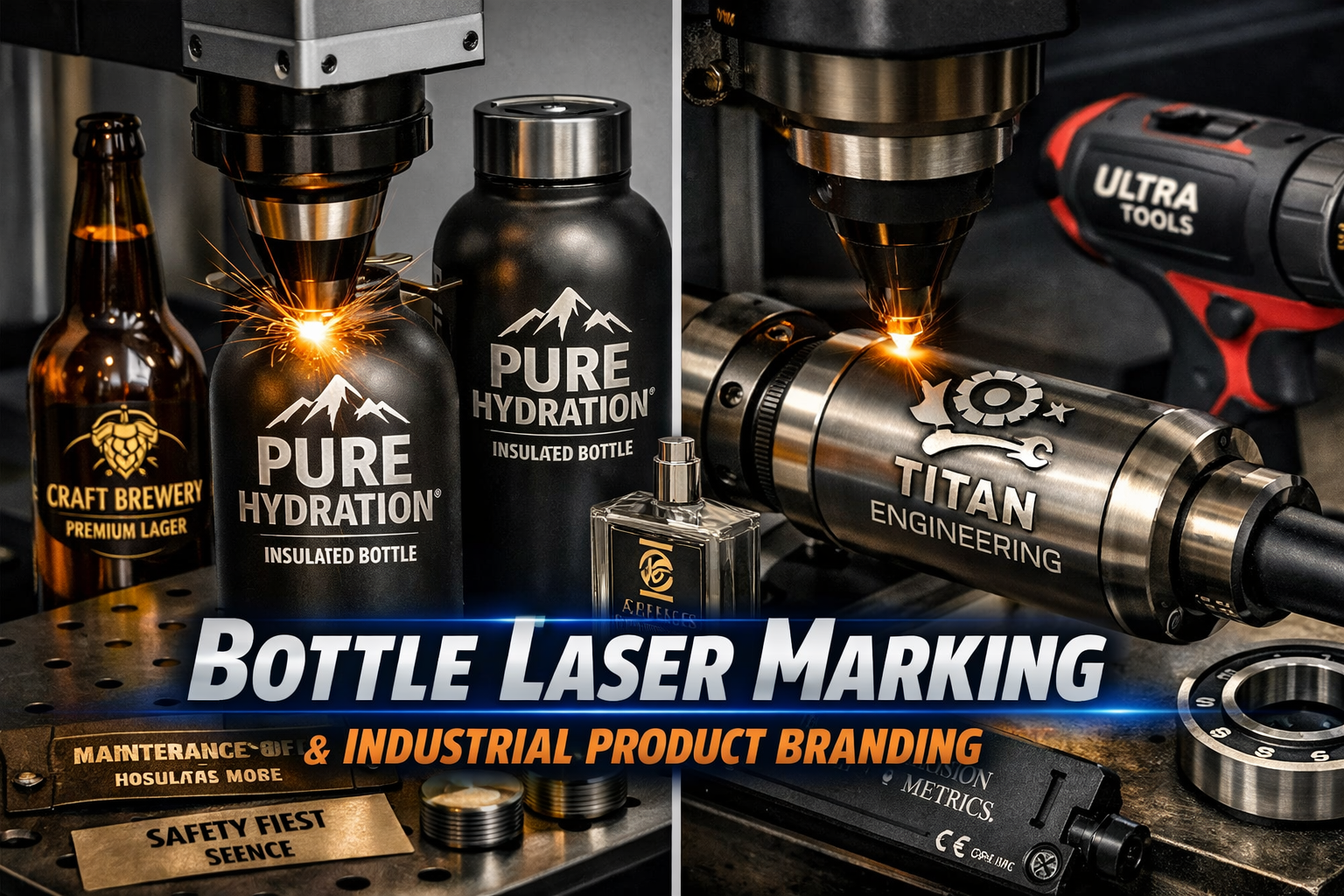
A Supporting Blog — Laser Cutting and Marking Machines for Construction
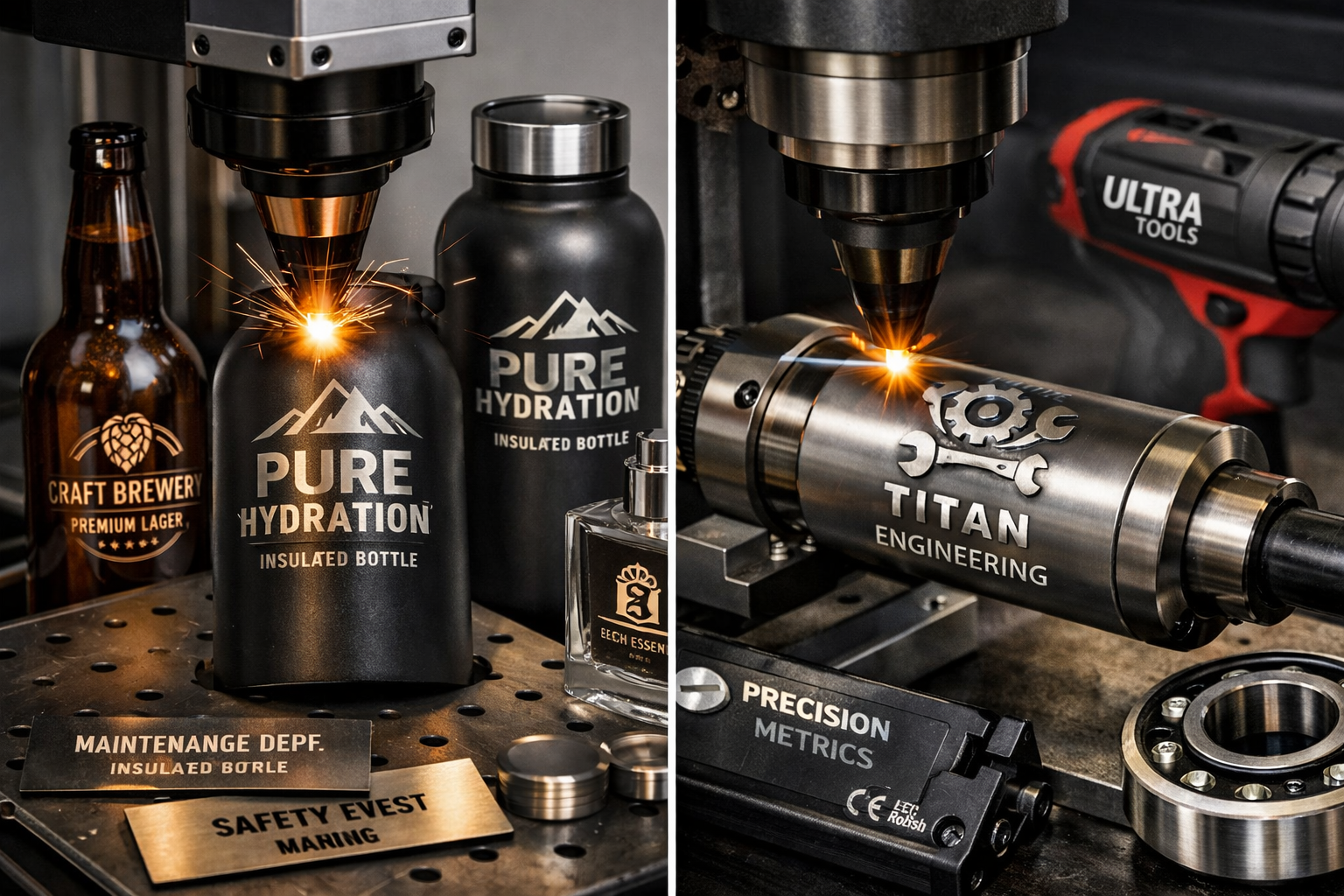
1. Introduction: Expanding Traceability Beyond the Structure
When fabrication managers discuss laser technology, their minds immediately jump to heavy structural steel, massive columns, and high-powered tube lasers. However, true workshop modernization and asset tracking do not stop at the primary framework. Complete quality control, brand visibility, and field logistics extend all the way down to auxiliary equipment, components, tools, and site safety gear.
This is where compact cylindrical and specialized component laser marking systems step in. While terms like “bottle laser marking” are heavily associated with commercial beverage packaging, the underlying tech is highly relevant to heavy industry. For the structural metal buyer or fab shop owner, this technology scales down high-speed marking to handle everything from fleet asset branding (like stainless steel site bottles) to industrial pressure canisters, valves, and precision machined components.
Note: This article is a specialized supporting guide within our broader framework. To see how automated processing scales up to structural components, read our core guide: Laser Cutting and Marking Machines for Construction — Pillar Blog.
2. Section 1: Industrial Applications (Beyond Commercial Consumer Goods)
Procurement teams should view bottle and small cylindrical laser marking through the lens of industrial utility and durability. On a busy construction or fabrication site, permanently etching identifiers onto cylindrical gear solves multiple operational problems:
Field Safety Equipment and Fleet Gear
- Insulated Stainless Steel Fleet Bottles: Keeping field crews hydrated on site is a safety mandate. Laser marking allows shops to cleanly brand rugged stainless steel thermal bottles with high-visibility corporate logos, crew identification, and safety markers that never peel off in the mud or wash off during intense industrial cleaning.
- Tool and Rigging Identification: Marking circular handles, cylindrical testing devices, and site instrumentation housings for clear tool-crib asset management.
Fluid Canisters and Pressure Vessels
- Industrial Spray and Chemical Bottles: Etching chemical compliance warnings, mixing ratios, and mandatory safety data directly onto aluminum or steel containers.
- Gas Cylinder and Valve Management: Applying permanent tracking matrixes, test dates, and safety inspection text onto high-pressure hardware profiles where standard stickers would easily fail or tear away.
3. Section 2: Wavelengths & Materials — Choosing the Right Tech
A common mistake buyers make is assuming a single laser marker can cleanly etch any substrate. In reality, matching the specific laser type to the chemical makeup of your surface is critical for a high-contrast, permanent finish.
[ SELECTING YOUR LASER SOURCE TYPE ]
│
┌─────────────────────────┴─────────────────────────┐
▼ ▼
FIBER LASERS (1064nm) UV & CO₂ LASERS
───────────────────────── ─────────────────────────
• Stainless Steel & Alloys • Industrial Glass Vials
• Anodized Aluminum Canisters • Specialized Thermoplastics
• Raw Industrial Metals • Heat-Sensitive Polymers
Fiber Lasers (1064nm)
This is the workhorse wavelength for the metal fabrication sector. It is ideal for stainless steel thermal bottles, aluminum canisters, and zinc-plated fittings. Fiber systems deliver exceptional contrast, crisp edge definitions, and speeds up to 8,000 mm/s by permanently modifying or annealing the metallic surface layer.
UV and CO₂ Lasers
If your branding scope extends to non-metallic components like plexiglass protection plates, fluid levels on glass tubes, or composite plastic containers, a UV laser is ideal. UV lasers operate via “cold marking”—a photochemical process that alters the target material without generating intense heat. This prevents structural micro-fractures in glass and eliminates melted edges on polymer bottles.
4. Section 3: Online Flying vs. Static Desktop Workstations
When investing in a laser marking system, you must choose between an automated inline setup or a standalone manual cell. Your choice depends directly on your batch sizes and processing speeds.
Online Flying Laser Markers
“Laser marking on the fly” means the system integrates directly over an active automated line or conveyor. As parts travel past on a conveyor belt, proximity sensors trigger the laser head to track, calculate, and cleanly etch moving targets dynamically. This is a game-changer for high-volume component manufacturers who need to apply real-time tracking numbers, lot codes, and logos to hundreds of components per minute without slowing down line velocity.
Static Desktop & Semi-Automated Systems
For the typical construction fabrication shop, a static desktop system fitted with a compact rotary jig is often the most practical choice. The operator places an item (like an aluminum canister or a piece of tooling) onto the workspace fixture, closes the protective enclosure, and executes the file path. This approach allows for deeper physical engraving, high design variability, and precise setup control for irregular shapes.
5. Section 4: Software, Serialization, and Permanence
A premium industrial brand mark must outlast the asset it identifies. Traditional adhesive labels or standard inkjets quickly degrade when exposed to grease, hydraulic fluid, harsh construction site solvents, or continuous sunlight UV exposure.
Advanced Software Capability
Modern marking machines utilize flexible control software (such as EzCAD or specialized proprietary suites) that seamlessly accepts raw vector formats like DXF, PLT, AI, or STEP. Operators can map graphic logos alongside automated alphanumeric serialization matrices.
Anti-Counterfeiting and Compliance
With international supply chains facing a rise in sub-standard copycat hardware, permanent laser etching serves as a security layer. Shops can burn complex, secure QR codes or unique cryptographic identifiers directly into structural component bodies, allowing site engineers to verify part authenticity instantly using an encrypted database.
6. Section 5: The Strategic Buyer’s Evaluation Checklist
Use this comparison summary matrix to assist your procurement team in selecting the appropriate framework based on your expected operational outputs:
| Buyer’s Priority Metric | High-Speed Online Flying Systems | Static Desktop / Rotary Systems |
| Primary Workflow Goal | Continuous production-line component serialization. | Deep, high-definition custom branding and labeling. |
| Material Specialty | Thin-walled metal cans, polymers, and line packaging. | Solid structural metals, tool bodies, and thick alloys. |
| Automation Overhead | Fully automated (requires conveyor integration). | Semi-automatic (requires manual operator loading). |
| Marking Profiles | Flat faces, one-sided cylinder tracking paths. | Fully synchronized 360-degree rotational engraving. |
| Ideal For | High-volume product part manufacturing plants. | General fab-shop tools, custom promotional, & site gear. |
Conclusion & Internal Linking Blueprint
Investing in a dedicated product marking and branding laser platform allows industrial fabricators to close the tracking gap. By taking control of the labels on your tools, small components, and field equipment, you provide professional, long-lasting clarity that reflects the quality of your heavy structural builds.
Related Posts
Laser Marking Machine for Rotary and Name Plates in Construction Fabrication
A Supporting Blog — Laser Cutting and Marking Machines for…
Cooker Cutting Laser Machine for Kitchenware Manufacturers
A Supporting Blog — Laser Cutting and Marking Machines for…
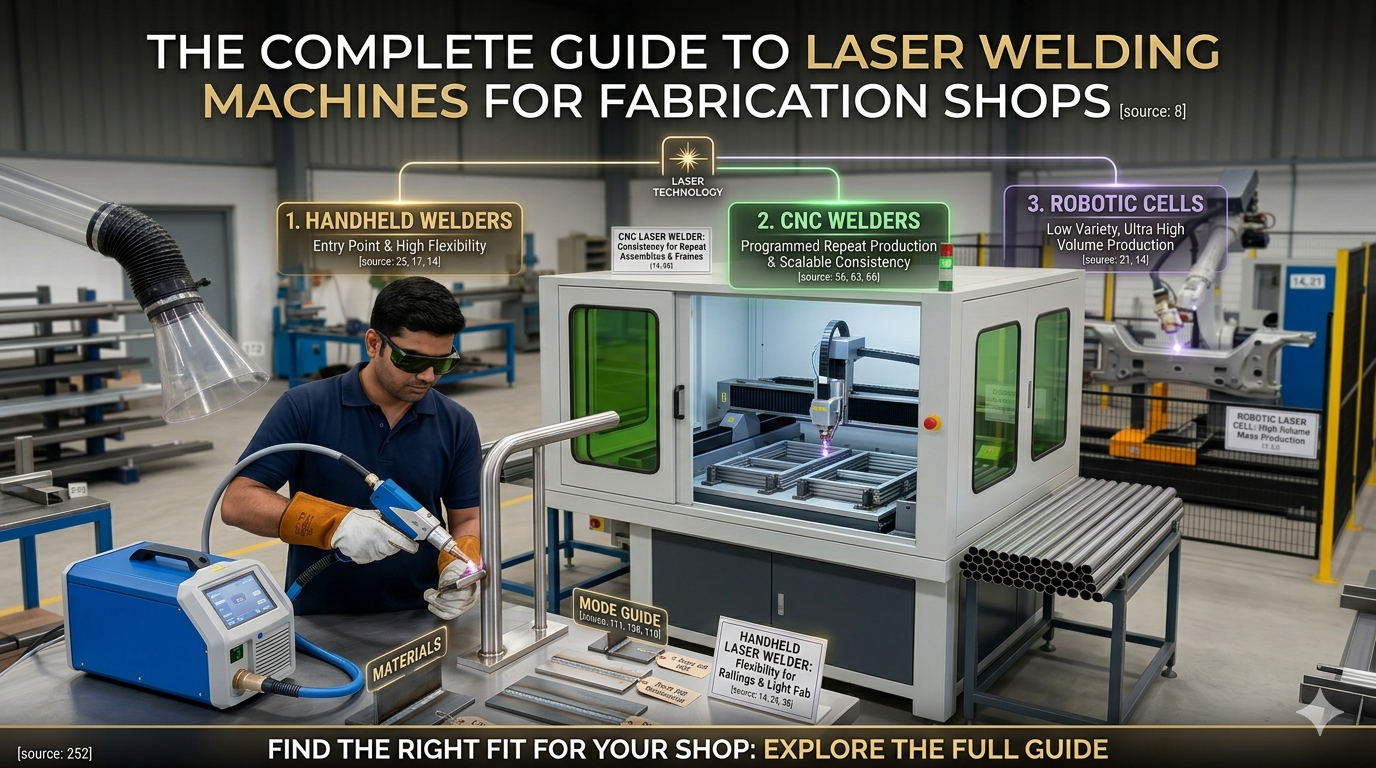
Laser Welding Machine for Metal Fabrication Shops
A Supporting Blog- Laser Cutting and Marking Machines for Construction…