
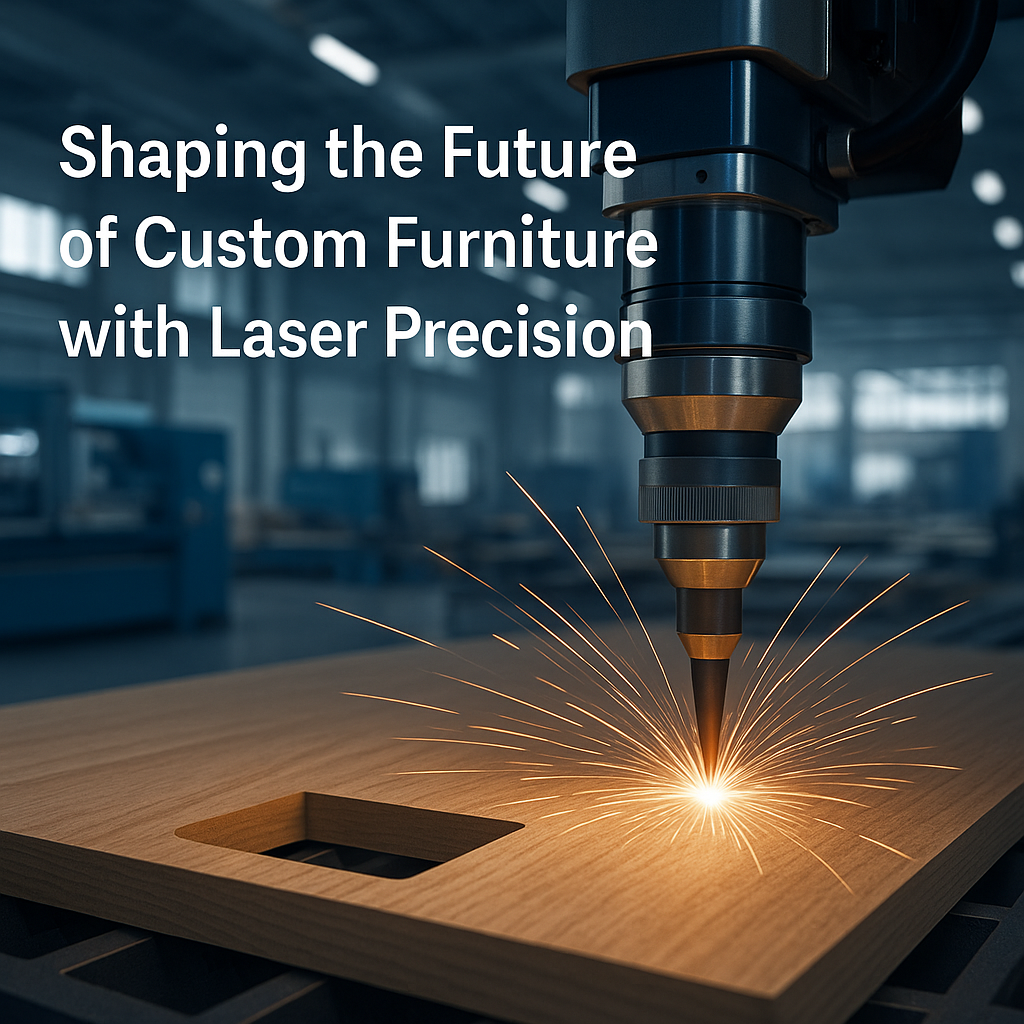
Imagine walking into a furniture showroom where every piece feels like it was designed just for you—down to the curves, joints, and even the tiniest details. That’s the future of furniture, and it’s happening now. As the appetite for customized, high-quality furniture grows, manufacturers are under pressure to deliver faster, cleaner, and more personalized solutions. Traditional methods? They’re falling behind. Enter laser cutting in furniture manufacturing—a breakthrough that combines speed, precision, and design freedom like never before. From concept to creation, laser cutting is not just transforming the process; it’s redefining what’s possible in modern furniture production.
What Is Laser Cutting?
Laser cutting is a non-contact manufacturing process that uses a focused beam of light to cut, engrave, or etch materials with incredible precision. In furniture production, CO2 and fiber lasers are commonly used depending on the material type. These lasers can cleanly cut through MDF, plywood, veneer, acrylic, and even some metals, creating detailed patterns and joints that are difficult to achieve manually.
Why Laser Cutting Is Ideal for Custom Furniture?
Modern furniture design demands unmatched flexibility and creativity—no two client projects are ever the same. Whether it’s a curved lounge chair with intricate detailing or a minimalist shelf that fits a unique space, customization is at the heart of modern trends. Here’s where high-precision cutting through laser technology becomes indispensable. Unlike traditional methods, laser cutting offers the agility to switch designs quickly, maintain tight tolerances, and execute complex patterns that elevate both form and function.
- Clean, precise edges with no need for rework
- Limitless design capabilities, including intricate curves, inlays, and patterns
- Consistency in every piece, even in small-batch or one-off jobs
- Least amount of material wastage and less post-processing effort.
This level of detail and speed empowers furniture makers to meet increasing custom orders without sacrificing quality.
Where Is Laser Cutting Used in Furniture Manufacturing?
Laser cutting is deeply integrated into multiple stages of modern furniture production, making it a cornerstone of both functionality and creativity:
- Creating decorative panels and room dividers with intricate geometric patterns or artistic flourishes that were once only achievable by hand. These panels serve both structural and stylistic purposes in interiors.
- Producing custom-fit inlays, logos, and engravings with ultra-fine detail that adds a premium, personalized touch to tables, chairs, cabinets, and more.
- Making joints and fixtures with precision accuracy, so that they fit perfectly and assemble easily. This reduces material waste, eliminates human error, and improves structural integrity across furniture pieces.
- Rapid prototyping of new designs, allowing manufacturers to test and refine concepts quickly before going into mass production. Whether it’s adjusting the fit of a modular shelf or previewing a one-off piece for a client, laser cutting shortens the development cycle significantly.
These diverse applications not only elevate the visual appeal of furniture but also streamline production and reduce overhead. In short, laser cutting has evolved from a supporting tool into an essential asset for any forward-thinking furniture manufacturer.
Comparison with Traditional Cutting Methods
| Traditional Methods | Laser Cutting |
| Lower precision and possible rework required | Higher accuracy and cleaner results |
| High maintenance due to tool wear | Less wear and tear on tools |
| Greater reliance on manual skill, increasing error risk | Reduced human error through automation |
| Longer setup and turnaround times | Faster setup and quicker production cycles |
| Occupies more floor space in workshops | Requires less physical space |
| Limited design flexibility | Supports a wider range of design tasks |
Laser cutting clearly surpasses traditional methods in precision, efficiency, and versatility—making it the smarter choice for modern furniture manufacturing.
What Are the Business Benefits of Laser Cutting for Furniture Manufacturers?
The benefits of using laser cutting machines in furniture factories go beyond just operational improvements—they offer a significant edge in today’s fast-paced, design-driven market.
- Faster time to market: Laser cutting significantly reduces the lead time needed to move from design to finished product. This is especially valuable for urgent custom orders, allowing manufacturers to meet tight deadlines without compromising quality.
- Flexible prototyping and design iterations: With digital design integration, manufacturers can quickly modify and test multiple prototypes, enabling faster client approvals and reducing the cost of trial-and-error.
- Enhanced quality control: Laser systems deliver consistent precision across every piece, reducing the chances of defects, minimizing material waste, and lowering product return rates.
- Scalability: Whether you’re a boutique furniture studio creating artisanal pieces or a large-scale manufacturer fulfilling bulk orders, laser cutting adapts effortlessly to varying production volumes, making it ideal for businesses of all sizes.
- Cost-efficiency in the long run: Although the initial investment may seem high, the long-term savings in labor, rework, material usage, and production time offer an excellent return on investment.
- Brand differentiation: With the ability to offer ultra-customized products and detailed design elements, manufacturers can set their brand apart in a crowded marketplace.
By streamlining workflow, enhancing design capabilities, and improving product consistency, laser cutting isn’t just a tool—it’s a strategic driver of growth for furniture manufacturers aiming to stay competitive and profitable.
Future Trends and Innovation
- Smart machine adaptability: AI-integrated laser systems automatically adjust cutting speed and depth in real-time based on material thickness, reducing errors and boosting efficiency.
- Seamless CAD integration: Laser machines now work hand-in-hand with 3D modelling and design software, allowing quick transitions from virtual concepts to physical products.
- AI-optimized nesting: Intelligent software arranges patterns to maximize material usage, minimizing waste and lowering raw material costs.
- Predictive maintenance: Smart analytics track machine performance and schedule maintenance before issues arise, minimizing unplanned downtime.
- Data-driven production insights: Manufacturers gain real-time visibility into workflow, productivity, and machine health, helping optimize output.
- Eco-conscious manufacturing: Reduced waste, improved energy efficiency, and smarter processes align with sustainability goals.
As these innovations converge, laser cutting becomes more than just a tool—it becomes the digital backbone of modern, agile, and sustainable furniture manufacturing.
Conclusion
Laser cutting in furniture manufacturing is more than a trend—it’s a powerful tool reshaping how the industry operates. With its blend of speed, high-precision cutting, and design freedom, it empowers manufacturers to create better products, faster. For those looking to meet the demand for customization and quality, laser cutting isn’t optional—it’s essential.
Contact us for a live demo. Explore our laser solutions for furniture manufacturers
Related Posts

SLTL Group Laser Cutting Machines: Precision, Power & Innovation from India to the World
Introduction In the fast-evolving world of metal fabrication, laser cutting…
Why Are Top Kitchenware Brands Turning to Laser Technology?
The utensil manufacturing industry has undergone a massive transformation in…
Laser Technology: The Secret Behind Modern Kitchen Tools
The kitchenware industry is rapidly embracing advanced technologies to meet…